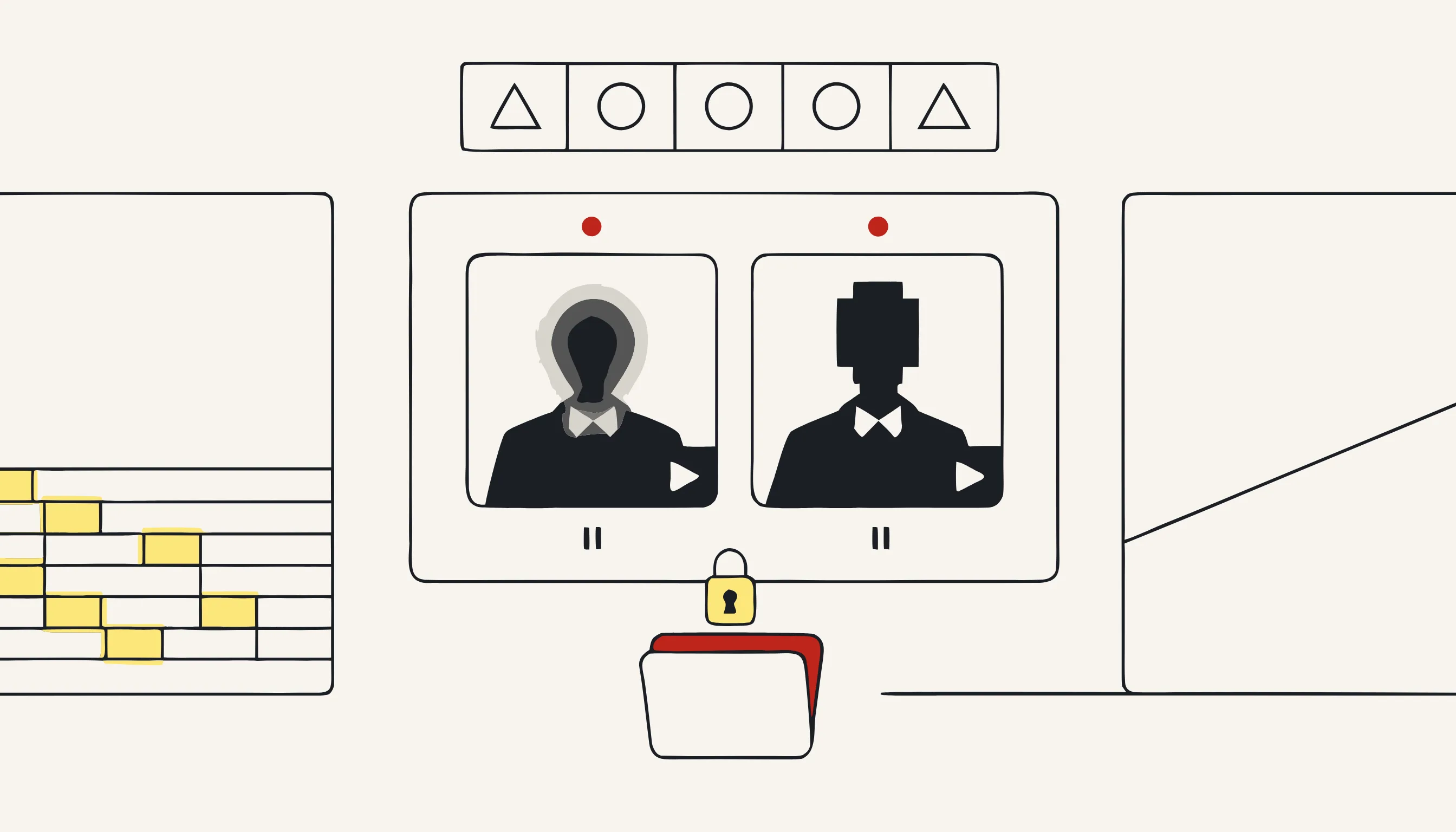
A license plate does not need extra context to become personal data. It is linkable on its own: a plate number traces back to a registered keeper through a vehicle registration database, which is exactly the test that GDPR uses. Whether that risk actually plays out for you depends on something people conflate constantly: redacting a plate and blurring one are not the same operation, and the difference decides whether your footage is actually safe to publish.
TL;DR
- Redaction destroys the pixels; blurring is a filter, and a weak one can sometimes be partially undone.
- Reversibility depends on blur strength, source resolution, and whether the effect is baked into re-encoded pixels or sitting on an editable layer above the original.
- For anything published, shared, or kept as evidence, use masking or pixelation strong enough that no character survives, re-encoded into the output file.
- Manual editing works for one clip with a plate or two; volume (dashcam archives, fleet footage, bulk exports) needs automatic detection.
- Medianonymizer redacts plates automatically with a reviewable preview before payment, from €4.99 per video; continuous pipelines needing an API should contact us directly.
Why a license plate counts as personal data
A plate is not anonymous, and it does not need to be for regulators to care. If it can plausibly be tied to an identifiable person, it is in scope, and it does not matter whether you personally have access to a registration lookup. The risk is that anyone downstream might.
That threshold gets hit more often than people assume:
- Dashcam clips published after a near-miss or accident, showing other drivers' plates.
- Real-estate and street photography where a parked car happens to be in frame.
- Fleet and delivery footage recorded from a company vehicle, capturing bystanders' cars.
- YouTube and social content filmed from a car window or a public street.
- Marketing and stock shoots where "a clean take" means nobody checked the parking lot.
None of these require a visible face to trigger a privacy obligation. The plate alone is enough.
Redaction vs. blurring: two different things wearing the same word
People use "blur" as a catch-all verb, but two different operations hide under it.
Redaction means the original information is gone from the file. A black box, a solid mask, or heavy pixelation applied directly to the pixel data and re-encoded into the video or image. There is nothing left to recover, because there is nothing left.
Blurring, strictly, is a visual filter. It reduces legibility by smoothing or averaging pixel values, but "reduces" is not "removes." A Gaussian blur is a mathematical operation with known properties, and mathematical operations can sometimes be run backwards.
The two overlap in practice: most tools label their masking feature "blur" regardless of which one it actually is. What matters is checking which one you're getting: is the detail destroyed, or just harder to see?
How reversible is a blurred plate, really
This is the part worth being precise about, because both "blur is unbreakable" and "all blur is reversible" are wrong.
A light or moderate blur over a high-resolution plate can, in some conditions, be partially reversed. Deconvolution algorithms and AI-based image enhancement are built to reverse exactly this kind of smoothing when the blur kernel is weak and the source resolution is high enough that structure survives underneath it. Video makes it worse: if a plate moves across several frames and the blur region shifts slightly frame to frame (strong in one frame, softer in the next because the tracker briefly lost it), an attacker can align and average across frames, recovering detail no single frame reveals alone. Inconsistent blur leaks through the gaps.
Strong pixelation or masking, applied to the actual pixel data and re-encoded, is a different situation. Once a region has been downsampled to solid-color blocks and the original samples are discarded, there is no mathematical path back: the information those blocks represented no longer exists in the file. It's the same logic used for redacting PII from call recordings: removal has to happen on the actual data, not as a cosmetic layer sitting on top of it.
So the honest framing is: risk is a function of blur strength, source resolution, and whether the effect is baked into re-encoded output or left in an editable layer. A weak blur on a 4K dashcam frame is a real risk. A hard pixelation mask, re-encoded, is not.
Masking vs. blur: what to actually ship
Two rules follow from that.
For anything with a compliance or publication purpose (dashcam footage going online, evidence for an insurance or legal claim, street photography, fleet footage leaving your organization), use masking or pixelation strong enough that no character of the plate is legible, re-encoded into the output. This is the only version of "blur" that behaves like actual redaction.
Blur is acceptable purely for aesthetics (a background car in a product shot you don't want distracting from the subject), as long as it's strong enough that identity isn't the point. If privacy matters even slightly, treat it as a compliance case and mask instead of blurring lightly.
Never ship a project file with an editor's blur effect still attached as a layer. If someone reopens that project, or export settings are loose enough to preserve the original underneath, the "redacted" version was never redacted: the original pixels are one settings change away. Export to a final file where the effect is burned in, not editable.
Manual, automatic, or API: how to decide
The right approach depends on volume, not principle.
Manual editing (motion tracking in a video editor)
Fine for one clip with one or two plates that stay reasonably visible. You draw a mask, track it by hand or with a built-in tracker, and export. It breaks down fast past a couple of plates, footage longer than a few minutes, or plates entering and leaving frame: a human misses instances at volume, consistently, because tracking dozens of small moving targets frame by frame is tedious in a way that produces gaps.
Automatic web tools
This is where Medianonymizer fits: upload a file, the system detects plates frame by frame automatically, pixelates them, and re-encodes the result before you download it. Pricing is per file (video from €4.99, images from €1.99), with no account required, and batch processing for multiple files. You get a preview before you pay, so you can confirm detection actually caught every plate before committing. It handles video up to roughly two hours and 4K resolution. This is the right lane for one-off jobs, moderate volume, and anyone who doesn't want to build infrastructure for something they need done today. See the full comparison of license plate blur tools if you're weighing options.
API and enterprise pipelines
If you're running a continuous pipeline (fleet telematics ingesting footage daily, mapping imagery processed at scale, a product that needs plate redaction built into its own upload flow), a self-serve web tool is the wrong shape for the job. That belongs behind an API with SLAs and volume pricing. Medianonymizer does not currently offer self-serve API access for this; if that's what you need, reach out directly rather than trying to script around the web UI. Dedicated enterprise vendors with API-first and on-premise deployment options also exist specifically for this use case, worth evaluating if footage cannot leave your infrastructure at all.
Edge cases that trip up automatic detection
Not every plate is a clean, front-on, well-lit rectangle, and automatic detection has to handle the messy cases:
- The EU blue band and country code on the edge of European plates can confuse detectors trained mostly on other formats: a good pipeline treats the whole plate region as the target, not just the alphanumeric string.
- Motorcycle plates are smaller, mounted at odd angles, and often partly obscured by the exhaust or the rider's leg.
- Reflective plates and angled shots produce glare that can make the plate boundary ambiguous.
- Night footage loses contrast, and a plate lit only by headlights from a following dashcam is a genuinely hard detection case.
None of this is a reason to skip automatic redaction: it's a reason to check the preview before you pay, rather than assume detection is perfect. A tool that shows you what it found before charging you is doing you a favor; one that doesn't is asking you to trust it blind.
Do you legally have to blur license plates
There's no single universal law that says "you must blur every plate in every video." What exists is GDPR's definition of personal data, and a plate linkable to an identifiable person falls under it. The obligation is triggered by what you do with the footage, not by the footage existing: recording is one thing, publishing or sharing identifiable footage of a third party without a lawful basis is another. Dashcam footage posted online after an incident is the most common real-world trigger: see are dashcams legal under GDPR for the fuller legal picture, including when legitimate interest as evidence covers you and when it doesn't.
A practical checklist before you publish
- Every visible plate is masked in every frame, including partial views at the edge of frame.
- The masking is strong enough that no character is legible, not a light blur that leaves structure visible.
- The effect is re-encoded into the output file, not an editable overlay layer.
- You reviewed a preview of the detected regions before finalizing, especially for night footage, motorcycles, or angled shots.
- Faces and other identifiers in the same footage are handled too, if anonymizing dashcam footage for publication.
- If volume or a continuous pipeline is involved, you've evaluated API options rather than forcing a manual workflow to scale.
Redact plates now
If you have footage with plates that need to come out before you publish or share it, upload it, review the detected regions in the preview, and download an irreversibly redacted copy: no manual tracking, no account required.
Frequently asked questions
Redaction destroys the underlying pixel data: a solid mask or heavy pixelation baked into a re-encoded file, with nothing left to recover. Blurring, strictly, is a filter that reduces legibility by smoothing pixel values; done weakly, that smoothing can sometimes be reversed. In practice most tools call their masking feature 'blur,' so what matters is the strength and whether the effect is baked into the file rather than sitting on an editable layer.