Compliance teams hear "anonymization" and "pseudonymization" used interchangeably in meetings, vendor pitches and even internal policies. They are not the same thing, and the GDPR treats them very differently. One can take your data out of scope of the regulation entirely; the other never does, no matter how strong it looks.
This explainer sets the record straight. It covers the legal definitions under the GDPR, the role of reversibility, exactly when each technique takes data out of scope, a side-by-side comparison table, and the misconceptions that trip up otherwise careful organizations. The goal is something you can cite and rely on when designing a process or defending one to a regulator.
TL;DR
- Pseudonymization replaces identifiers with reversible tokens. The data is still personal data and stays fully in scope of the GDPR (Article 4(5), Recital 26).
- Anonymization removes the link to an individual so that re-identification is no longer reasonably possible. Truly anonymous data is out of scope of the GDPR (Recital 26).
- The dividing line is reversibility: if a key, mapping or additional information can restore identity, you have pseudonymization, not anonymization.
- You can produce irreversibly anonymized files right now: sensitive data is located, then destroyed deterministically, with no key left behind.
The two definitions, straight from the GDPR
These terms are not marketing language; they are legal categories with consequences for what obligations apply.
Pseudonymization (Article 4(5))
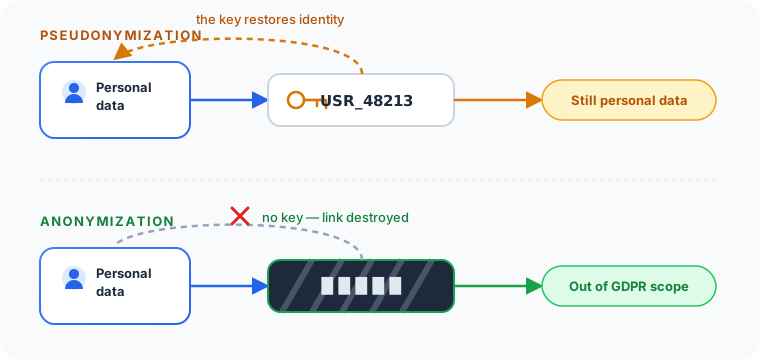
The GDPR defines pseudonymization as processing personal data so that it can no longer be attributed to a specific person without the use of additional information, provided that additional information is kept separately and protected. The classic example: replacing a customer name with USR_48213 while a secure lookup table maps the token back to the person.
The defining feature is that the link still exists. It has been separated and protected, but it can be restored. That is why pseudonymization is a security and data-minimization measure, explicitly encouraged by Article 32, but never an exit from the regulation.
Anonymization (Recital 26)
Anonymous information is defined by what it is not: data that does not relate to an identified or identifiable natural person, or personal data rendered anonymous in such a way that the person is no longer identifiable. The GDPR's data-protection principles "do not apply to anonymous information."
The crucial qualifier in Recital 26 is the "means reasonably likely to be used" test: to decide whether someone is identifiable, you must account for all the means reasonably likely to be used by the controller or another person to identify them, considering cost, time and available technology. Anonymization is therefore not a single technique but an outcome: re-identification is no longer reasonably possible.
At a glance, the two techniques pull in opposite directions:
- Removes data from GDPR scope when truly irreversible
- No key, salt or mapping is left behind
- The link to the person is destroyed for good
- Fits published datasets, long-term archives and shared media
- Always remains personal data: fully in scope
- Reversible by design: the key restores identity
- A strong security and data-minimization measure (Art. 32)
- Every GDPR duty still applies: lawful basis, retention, rights
Reversibility is the whole game
Rule of thumb
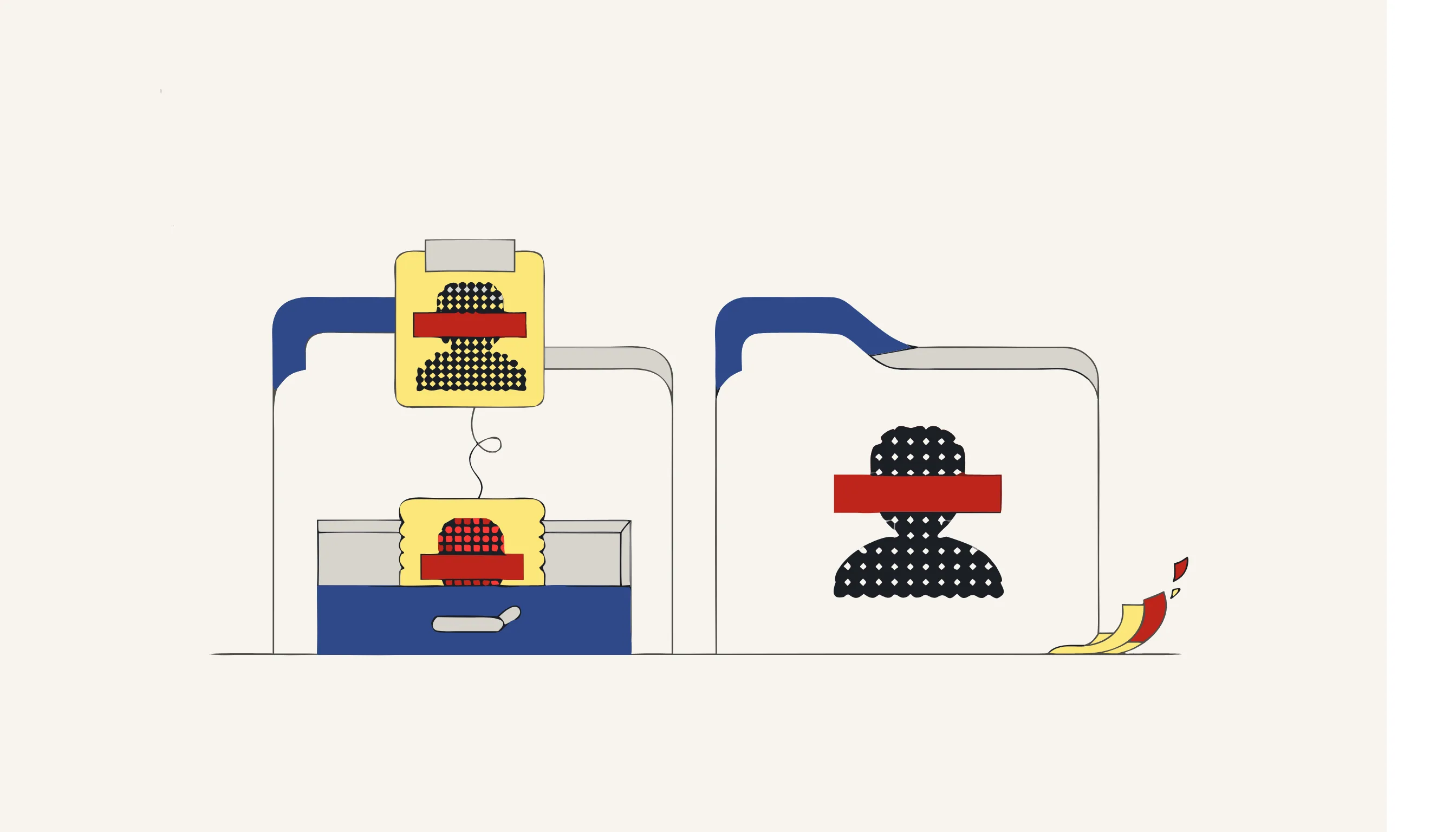
If you remember one thing, make it this: reversibility determines the legal category. A surviving key means pseudonymization; a destroyed link means anonymization.
- If there is a key, mapping, salt, lookup table or any "additional information" that could re-link the data to a person → it is pseudonymization, and the data is personal data.
- If the original identifying information has been destroyed and cannot be recovered by reasonable means → it is anonymization, and the result may be out of scope.
Encryption is not anonymization
Encrypted personal data is the textbook case of pseudonymization: the ciphertext is meaningless without the key, but the key exists and the plaintext can be restored. Strong encryption is excellent security. It is not an escape from the GDPR.
The same logic applies to media. Blurring a face with a reversible filter, or muting audio with a layer that can be peeled back, is pseudonymization at best. Destroying those pixels or samples outright is anonymization. The test is always: can anyone, by reasonable means, get the original back?
When each takes data out of scope
This is the question that actually matters for compliance planning.
| Aspect | Pseudonymization | Anonymization |
|---|---|---|
| GDPR legal basis | Article 4(5), Article 32 | Recital 26 |
| Still personal data? | Yes | No (if truly anonymous) |
| In scope of the GDPR? | Always | Out of scope |
| Reversible? | Yes: by design, with the key | No: link is destroyed |
| Key / mapping retained? | Yes, stored separately | None exists |
| Primary purpose | Reduce risk, enable secure use | Remove the data from regulation |
| Re-identification risk | Present (controlled) | Negligible / none by reasonable means |
| Typical techniques | Tokenization, encryption, key-coded IDs | Destruction, aggregation, k-anonymity, generalization |
Pseudonymization never removes data from scope. It reduces risk, supports breach mitigation and may relax some obligations, but every GDPR duty (lawful basis, retention limits, data-subject rights) still applies.
Anonymization removes data from scope only when the bar in Recital 26 is genuinely met. That is a high bar. It is judged against all means reasonably likely to be used by anyone, not just by you, and it must hold over time as re-identification techniques improve. A dataset that is "anonymous" today can drift back into personal-data territory if new auxiliary data makes re-identification feasible.
Anonymity is a moving target
The Recital 26 test is judged against all means reasonably likely to be used by anyone, and it must keep holding as re-identification techniques improve. Data that is anonymous today can slip back into scope tomorrow if new auxiliary datasets make re-identification feasible.
A practical decision aid
- Does a key, salt, mapping or backup exist that could restore identity? → pseudonymization.
- Could a motivated third party re-link records using other available datasets? → not yet anonymous.
- Are quasi-identifiers (postcode + birth date + gender, rare job titles, exact timestamps) still present and unique? → re-identification risk remains.
- Has the original identifying content been destroyed, with nothing retained to reverse it? → candidate for true anonymization.
Common misconceptions
"We removed the names, so it's anonymous"
The single most expensive mistake. Removing direct identifiers leaves quasi-identifiers that, in combination, often single out individuals. Well-known re-identification studies have shown that a small number of attributes (such as postcode, date of birth and gender) can uniquely identify a large share of a population. Stripping names is a start, not a finish.
"Encryption equals anonymization"
No. Encrypted data is pseudonymized data: the key restores the original. Encryption protects data; it does not take it out of scope.
"Hashing makes it anonymous"
Hashing identifiers (emails, phone numbers) is pseudonymization, not anonymization. The input space is often small enough to brute-force or attack with a dictionary, and a hash is a stable token that still links records to the same person. Unless the hash is salted, discarded and unrecoverable, the link persists.
"Pseudonymized data has fewer rules"
It has some relief in places, but it is still personal data with the full weight of the GDPR behind it. Treating pseudonymized exports as if they were free of obligations is a frequent audit finding.
"Anonymization is permanent and final"
Anonymity is relative to the means reasonably likely to be used, and those means evolve. What is anonymous today may not be in five years. The durable answer is to destroy the identifying data rather than merely obscure it, so there is nothing to re-link regardless of future capability.
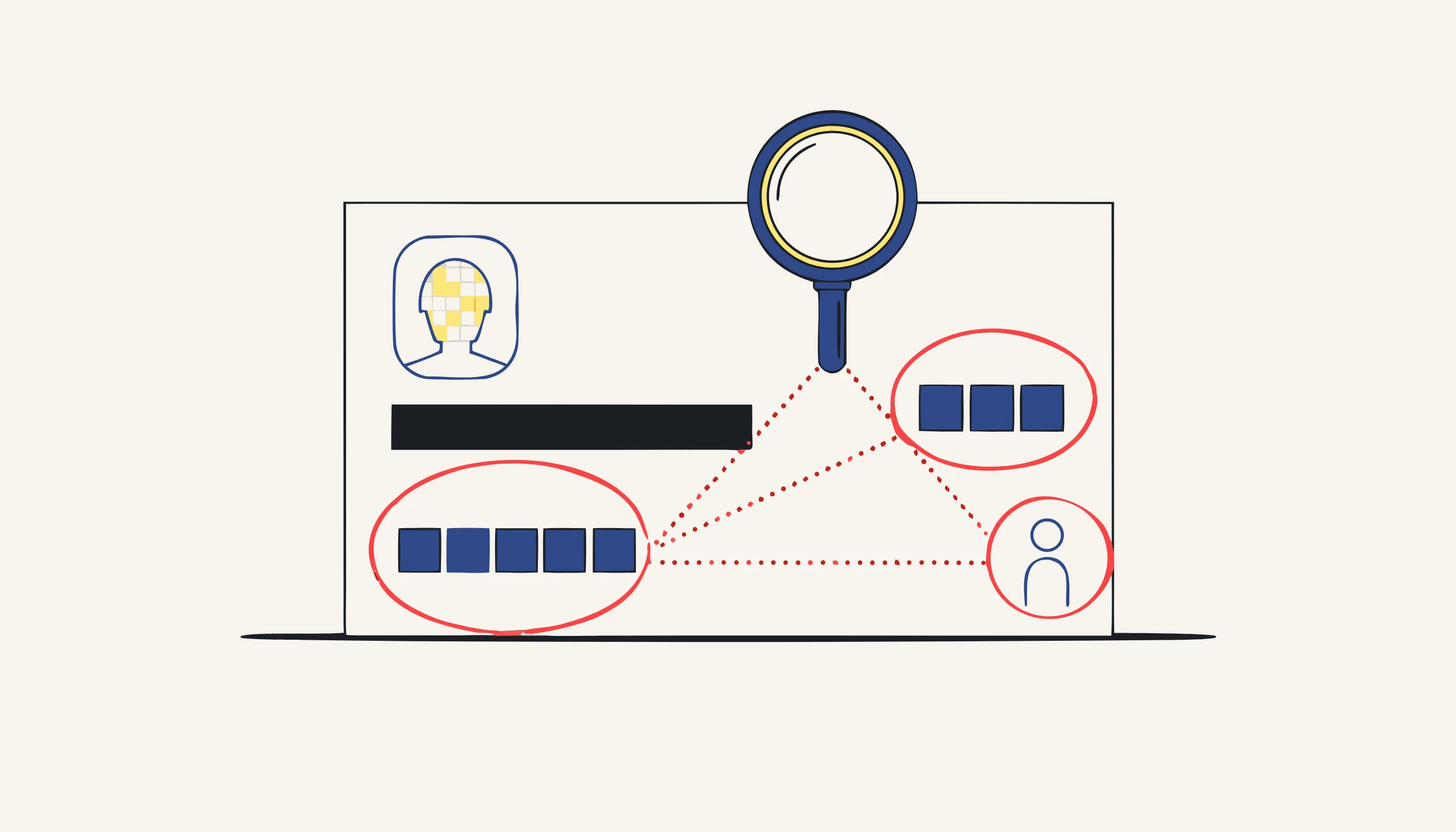
How to actually achieve irreversible anonymization
The reliable pattern separates two jobs that are easy to conflate:
- Locating sensitive data: finding where the personal information is.
- Removing it: destroying that data so it cannot be recovered.
AI is genuinely good at the first job: speech-to-text and named-entity recognition find names in audio, object detection finds faces in video, OCR and pattern rules find PII in documents. But the second job must never be left to a model, because generative editing is non-deterministic and unauditable.
This is the core idea behind how Medianonymizer approaches every media type: AI only LOCATES the sensitive data; deterministic code REMOVES it. Boxes are drawn over pixels, regex-plus-checksum matches structured identifiers, beeps or mutes replace audio samples, and metadata is stripped at the byte level. Because the removal is plain, testable code operating on exact coordinates and timestamps, the result is the same every time, irreversible and auditable, exactly the properties Recital 26 demands.
You can see this principle applied across media:
- Anonymizing audio recordings: locate spoken PII, destroy it with beep or silence on the waveform.
- Blurring faces in video: detect faces, burn irreversible boxes into the frames.
- Anonymizing images and metadata: redact pixels and strip EXIF so nothing reversible remains.
- Redacting PII in documents: flatten redactions so the underlying text is gone, not hidden.
For the operational standard behind this, see irreversible, auditable anonymization best practices.
The bottom line for compliance teams
- Use pseudonymization when you need the data to remain usable and re-linkable under control: analytics on coded IDs, secure processing, breach-risk reduction. Accept that it stays in scope.
- Use anonymization when you want data permanently out of scope: published datasets, long-term archives, shared media. Accept that it must be truly irreversible and tested against reasonable re-identification.
- Never confuse the two in policy or in vendor claims. The word on the label does not matter; whether a key or link survives does.
Anonymize your files irreversibly
If your goal is data that is genuinely out of GDPR scope, the technique has to destroy the link, not hide it. Upload your audio, video, images or documents, tell the assistant what to remove, and download a copy where the sensitive data is gone for good, with an auditable record of what was redacted.
Frequently asked questions
Yes. Pseudonymized data is explicitly personal data under Article 4(5) and Recital 26, because a key or additional information can re-link it to an individual. It remains fully in scope of the GDPR, even if the risk is lower.