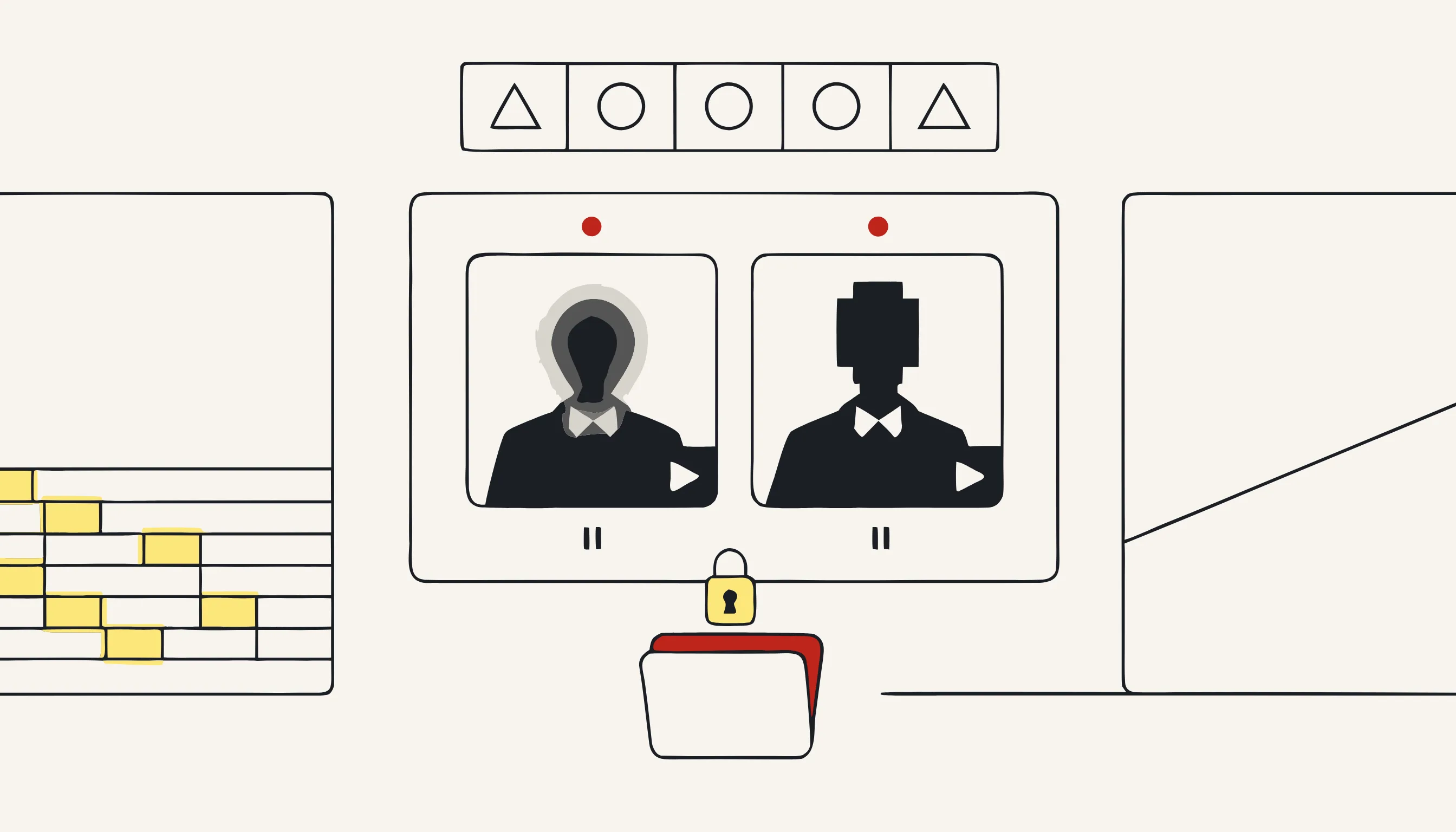
If your organization handles recordings, images, scanned documents or call logs, anonymization is rarely the hard part; proving it was done correctly is. A regulator or auditor will not accept "we ran it through a tool." They want to know what was removed, how, whether it can be recovered, and who checked. Most teams can produce a redacted file but cannot answer those questions.
This guide lays out the best practices that make anonymization both irreversible (the data is truly gone) and auditable (you can demonstrate it). These two properties are not the same, and you need both. The principles below are media-agnostic: they apply equally to audio, video, images and PDFs.
TL;DR
- Irreversible means the data is destroyed in the output, not masked. Auditable means you can prove what was removed and how. You need both; one without the other fails a compliance review.
- Separate the workflow into two stages with different tools: AI locates sensitive data, deterministic code removes it. Never let a model do the removal.
- Verify every output (automated re-scan plus human spot-check), define retention for inputs and manifests, and never train models on user data.
- You can run an irreversible, auditable redaction now, no account needed; the original is destroyed, not hidden.
Irreversible vs. auditable: two different requirements
Teams often conflate these, then fail an audit because they optimized for the wrong one.
Irreversibility is a property of the output file. After redaction, the sensitive data must not exist in the bytes you ship. A blurred face that can be sharpened back, a "redacted" PDF where the text sits under a black rectangle, or a beep overlaid on top of the original audio track. None of these are irreversible. They are theater.
Auditability is a property of the process. Even a perfectly irreversible file is useless in a dispute if you cannot show what was detected, what was removed, and that a human confirmed it. Auditability lives in the record you keep alongside the file.
| Property | What it answers | Where it lives | Failure mode |
|---|---|---|---|
| Irreversible | "Can the data be recovered?" | The output file's bytes | Overlay/key allows reconstruction |
| Auditable | "Can you prove what you did?" | The redaction manifest + sign-off | No record; cannot defend the result |
| Both | "Is it compliant and defensible?" | File + process together | Either one alone is insufficient |
The rest of this guide is about engineering both into the workflow.
Best practice 1: Separate "locate" from "remove"
This is the single most important architectural decision, and it underpins everything else.
There are two distinct jobs inside any anonymization task:
- Locating: finding where the sensitive data is: a face's coordinates, a card number's byte offset, the timestamp of a spoken name, a PII span on page 3.
- Removing: destroying that exact location in the output.
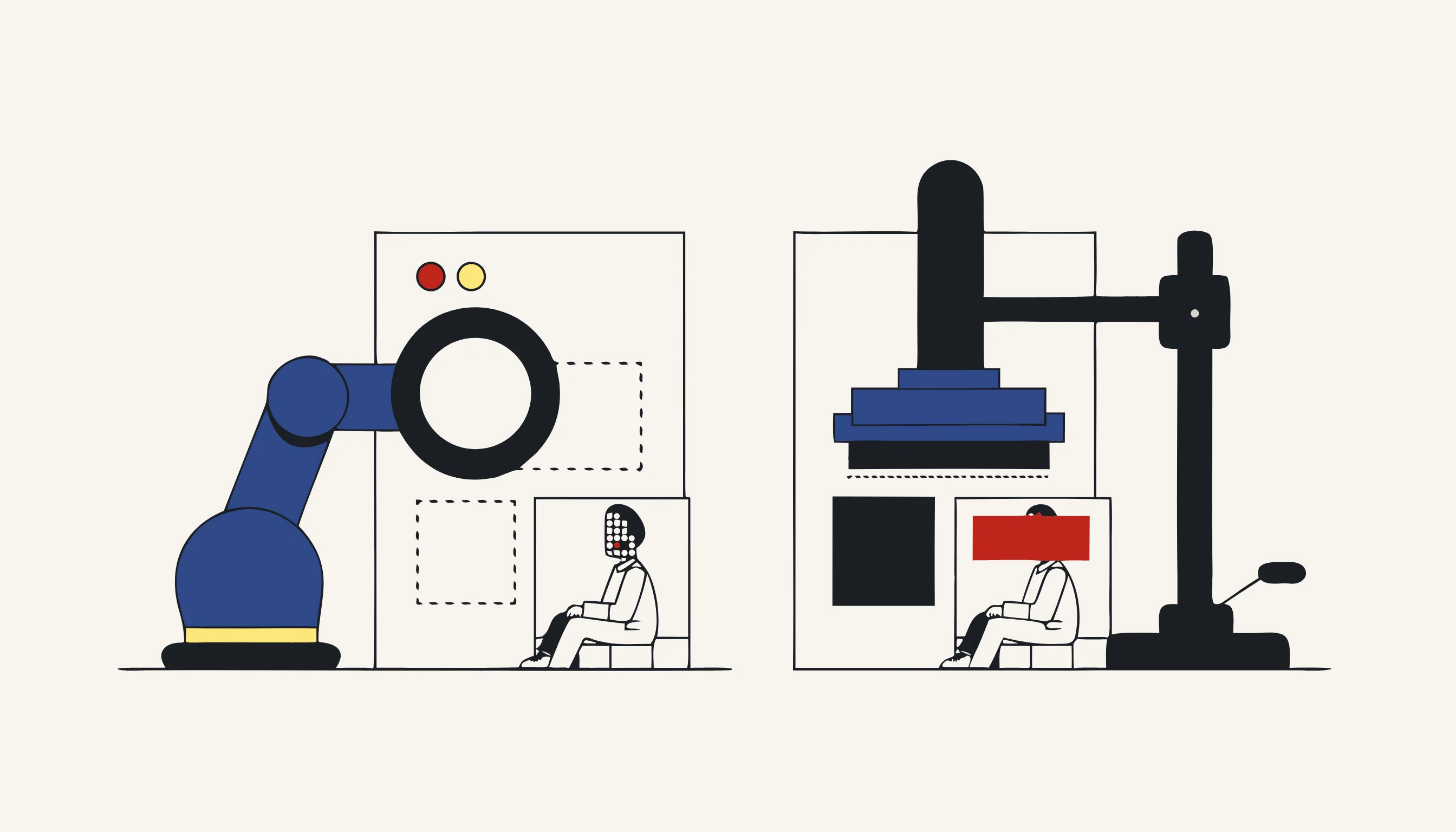
These jobs have opposite requirements. Locating is fuzzy, contextual and benefits enormously from AI: speech-to-text, named-entity recognition, face detection, OCR. Removing must be exact, repeatable and provable, which is precisely what AI is bad at.
Why AI must never do the removal
Hand a file to a generative model and ask for "the anonymized version" and you get a non-deterministic result: run it twice, get two different outputs, with no guarantee every identifier was caught and no way to prove what changed. That is unauditable by construction.
The reliable pattern keeps the model in an advisory role:
- AI locates → produces a map of regions/spans/timestamps to redact.
- Deterministic code removes → applies an exact, testable operation to each location.
This is exactly how Medianonymizer handles every media type: the model only points at sensitive data; plain code does the destruction. The same input always yields the same output, and every removal can be traced to a rule.
Best practice 2: Use deterministic redaction per media type
"Deterministic" means the removal is a fixed function of its input: given the same file and the same detected locations, you get the same bytes out, every time. Each medium has a proven deterministic primitive.
- Images: flatten opaque boxes onto the pixels and strip EXIF/XMP metadata. The face or plate is gone from the raster; GPS and device tags are gone from the headers. See anonymizing images: faces and metadata.
- Video: apply per-frame masking or blur that is baked into the encoded frames (not a separate overlay track), plus mute or beep for audio. See blurring faces in video and anonymizing CCTV footage.
- Audio: replace the exact time ranges on the waveform with a beep or silence, so the original speech in those ranges is destroyed. See anonymizing audio recordings and redacting PII from call recordings.
- Documents: remove the underlying text and burn opaque redactions into the rendered output; detect structured identifiers with regex plus checksum validation so a real IBAN is removed but a random number string in prose is not. See PII redaction in documents.
The checksum discipline for structured identifiers
For card numbers, IBANs, national IDs and similar, a plain regex over-matches. Pairing the pattern with a checksum (Luhn for cards, the ISO 7064 mod-97 check for IBANs) means you redact genuine identifiers and leave coincidental digit strings untouched. This both improves precision and gives you a defensible, rule-based reason for every redaction, which matters when an auditor asks why a span was removed.
Best practice 3: Verify, do not assume
Detection is never perfect, so anonymization is not "done" when the tool finishes. Build verification into the workflow as a mandatory stage.
- Automated re-scan: run detection again over the output. Any PII the second pass finds is a leak the first pass missed. A clean re-scan is positive evidence for your audit trail.
- Human spot-check: a reviewer confirms the redactions land on the right regions and nothing obvious slipped through. Automated detection plus human sign-off is the combination auditors expect.
- Reproducibility test: because removal is deterministic, re-running the same input through the same pipeline must produce byte-identical output. If it does not, something non-deterministic crept in.

Best practice 4: Keep a redaction manifest for audits
The file alone proves nothing. The manifest is your evidence. For each job, record:
- What was detected: the entity types and counts (names, numbers, faces, etc.).
- Where: precise locations: timestamps, pixel coordinates, page/byte offsets.
- How it was removed: the deterministic method per location (box, beep, mute, regex+checksum, metadata strip).
- Integrity hashes: a hash of the input and of the output, so neither can be silently swapped later.
- Who and when: the reviewer who signed off and the timestamp.
- Re-scan result: confirmation the output passed a clean second detection pass.
This manifest is what turns "we anonymized it" into a defensible claim. Keep it for at least as long as you keep the output, and treat it as part of your GDPR documentation for enterprises.
Best practice 5: Define retention, and never train on user data
Two policies that auditors look for explicitly, and that many tools quietly violate.
Retention. Decide upfront how long inputs, outputs and manifests live. The safest default is to delete the original input as soon as the anonymized output and manifest are produced. You cannot leak what you no longer store. If you must retain originals (legal hold, evidence), keep them encrypted and access-controlled, separate from the anonymized copies. Data minimization is a GDPR principle, not a nice-to-have.
Never train on user data. A surprising number of "free" anonymization tools retain uploads to improve their models. For sensitive content this is unacceptable: it turns a privacy tool into a privacy risk, and it is a finding waiting to happen in any vendor assessment. Best practice is unambiguous: user files are processed, the result is returned, and nothing is retained for training. When evaluating a vendor, get this in writing. For a deeper treatment, see data anonymization and enterprise compliance.
Putting it together: the irreversible, auditable workflow
The complete loop, regardless of media type:
- Ingest the file; record an input hash.
- Locate sensitive data with AI (transcription, NER, detection, OCR): produce a map, change nothing yet.
- Remove each location with deterministic code appropriate to the medium.
- Verify: automated re-scan of the output plus a human spot-check.
- Document: write the redaction manifest, record the output hash and reviewer sign-off.
- Retain or delete per policy; never feed inputs into model training.
Follow it and you can answer every question an auditor asks, and the data is genuinely gone, not merely hidden. If you need the formal distinction between destroying data and tokenizing it, read anonymization vs. pseudonymization.
Anonymize the right way now
You don't have to assemble this pipeline yourself. Upload a file, let the assistant locate the sensitive data, and let deterministic code remove it, irreversibly, with the audit trail you need to defend the result.
Frequently asked questions
Irreversibility means the original sensitive data is destroyed in the output, not hidden behind a layer or a key. A black box drawn over a face must flatten the pixels; a redacted number must be overwritten in the bytes. If there is any token, overlay, or key that could restore the data, it is pseudonymization, not anonymization.