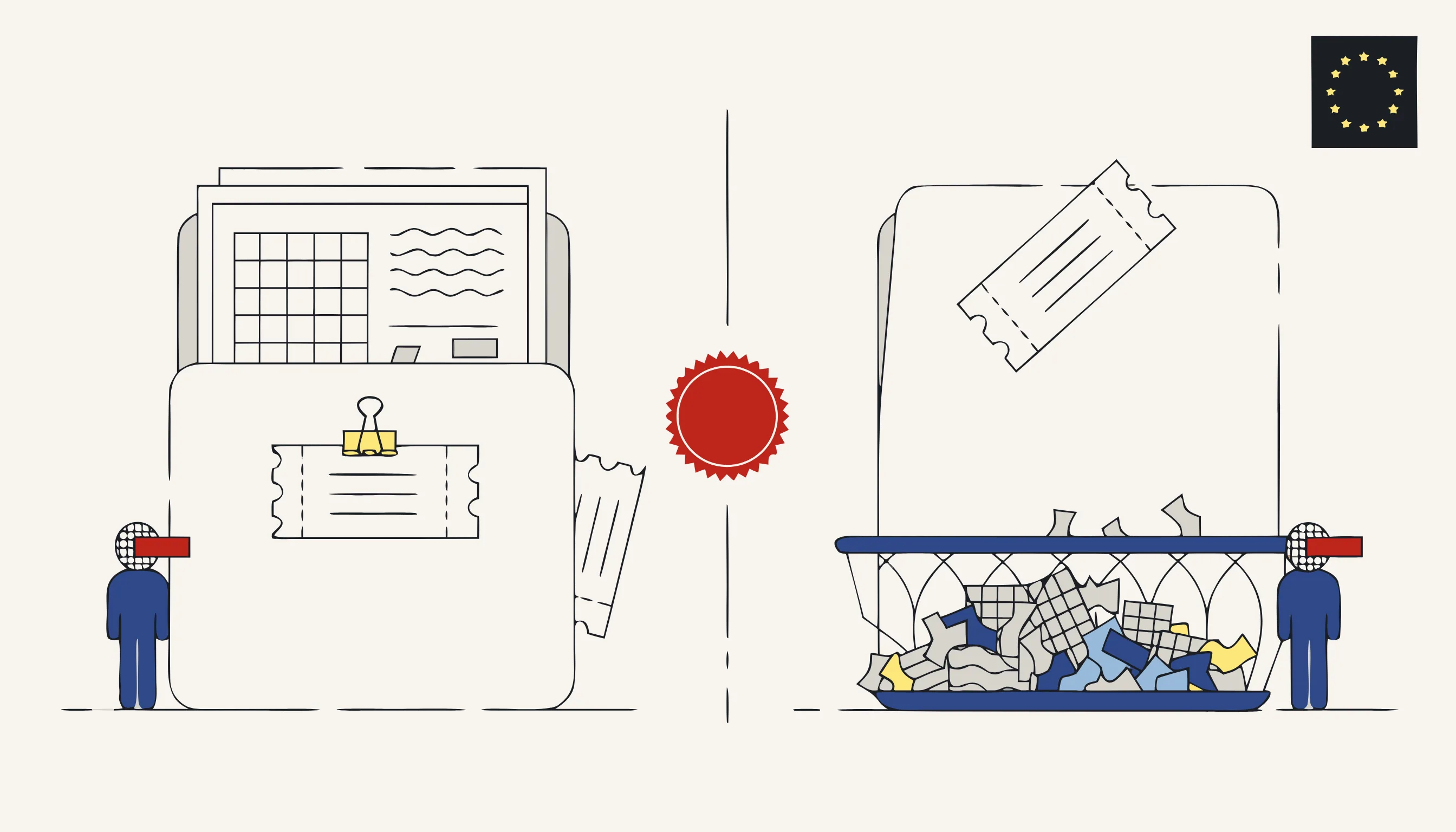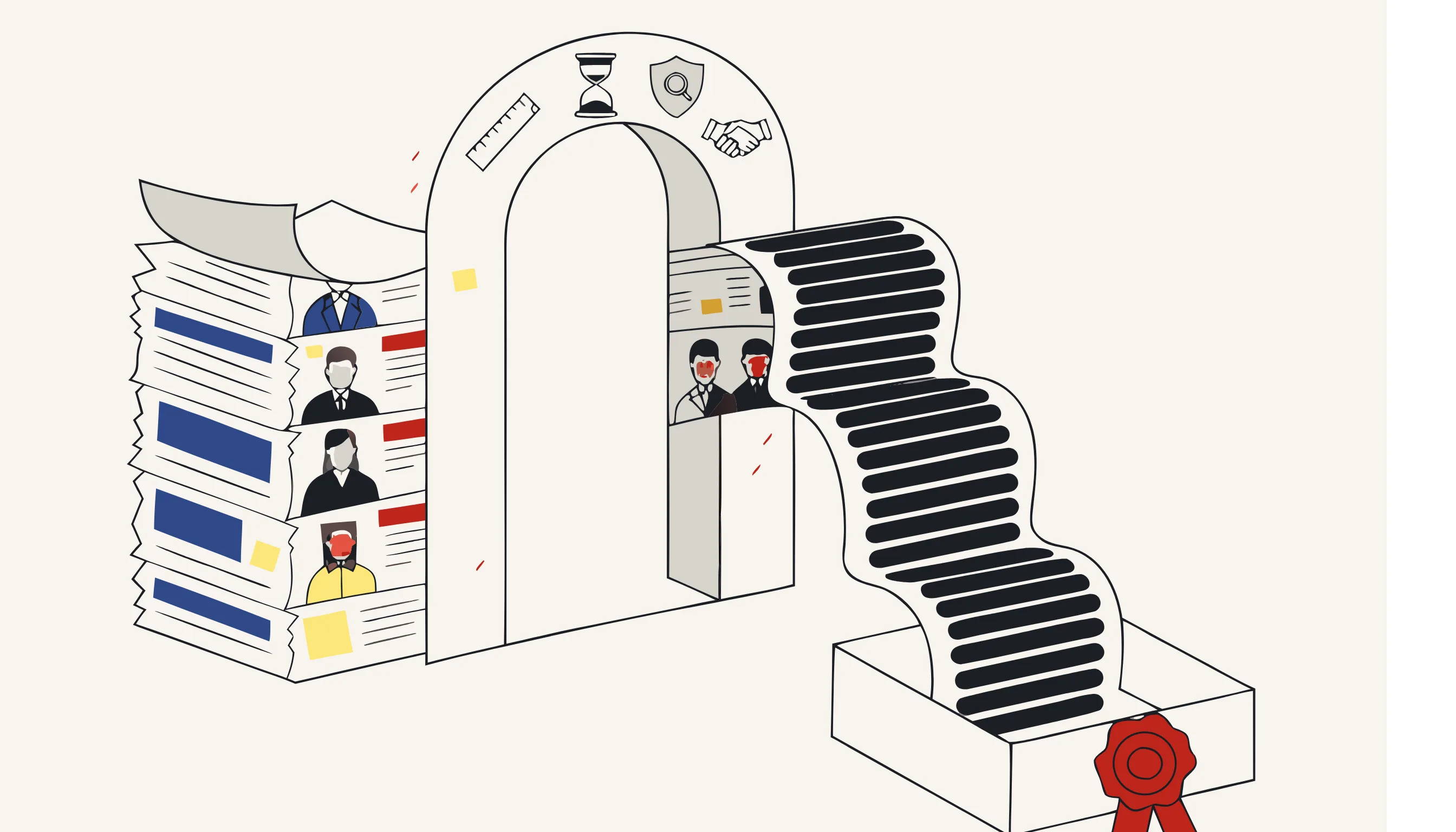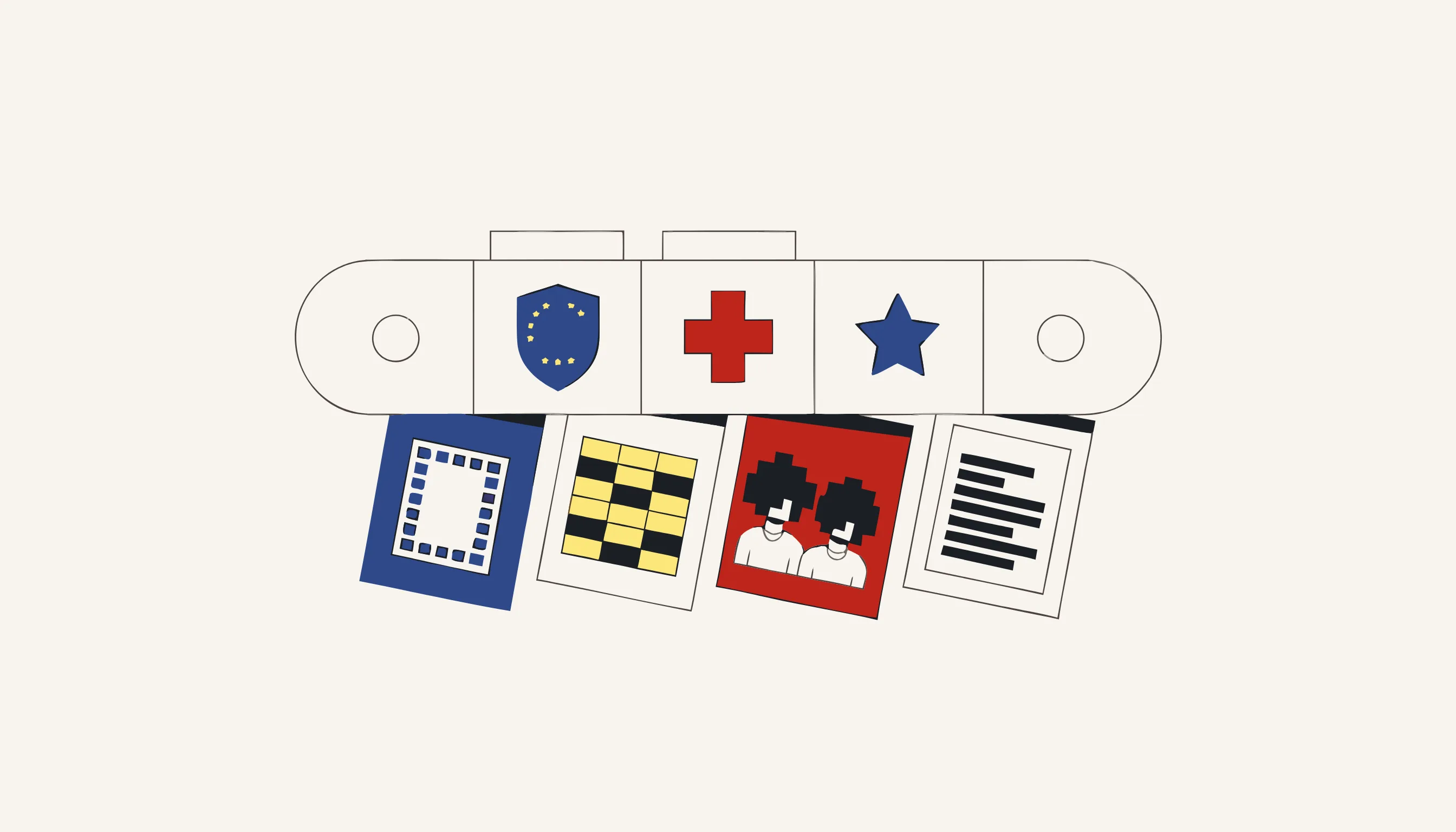
Every regulated organization eventually hits the same wall: it holds recordings, scans, screenshots and documents full of personal data, and three different regulations each demand something slightly different about how that data is handled. GDPR governs EU residents, HIPAA governs US health information, and CCPA governs California consumers, and a single dataset can be subject to all three at once.
The good news is that anonymization is the one control that satisfies all of them, because data that no longer identifies a person largely falls outside the scope of each regime. The hard part is doing it consistently across every media type (audio, video, images, documents) with roles, tooling and audit trails that survive a regulator's scrutiny. This guide maps the obligations and shows how to build a program that holds up.
TL;DR
- GDPR, HIPAA and CCPA all reward anonymization: truly de-identified data falls outside GDPR, qualifies as de-identified under HIPAA, and is excluded from CCPA's "personal information," eliminating most downstream obligations.
- The obligations differ by media type: a face in a video, a name spoken in a call, an MRN on a scanned form and an IP in a log each need a different removal technique mapped to the same policy.
- A defensible program needs four things: a written policy, clear roles, tooling that is irreversible and auditable, and a retained audit trail proving what was removed and when.
- You can anonymize a file across any media type right now: AI locates the sensitive data, deterministic code removes it, and the result is irreversible by construction.
Why anonymization is the cross-regulation control
Most compliance controls are about governing personal data: consent, access requests, breach notifications, retention limits. Anonymization is different. It removes the data from scope entirely, which collapses all of those obligations at once.
The three regimes use different language for the same idea:
| Regulation | Scope trigger | Anonymization concept | Effect when achieved |
|---|---|---|---|
| GDPR (EU) | "Personal data" (any info on an identifiable person) | "Anonymous information" (Recital 26) | Falls outside the Regulation entirely |
| HIPAA (US health) | "Protected Health Information" (PHI) | "De-identified" via Safe Harbor or Expert Determination | No longer PHI; use and disclosure unrestricted |
| CCPA/CPRA (California) | "Personal information" | "Deidentified" / "aggregate" information | Excluded from the definition of personal information |
The catch is the standard. GDPR sets the highest bar: data is anonymous only if re-identification is not reasonably likely for anyone, accounting for all auxiliary data that might be combined with it. HIPAA gives you two concrete paths: Safe Harbor (strip 18 enumerated identifier types) or Expert Determination (a qualified expert certifies low re-identification risk). CCPA requires that you cannot reasonably link the data to a consumer and that you commit, contractually and operationally, not to re-identify it.
If you engineer for the GDPR bar (irreversible removal, not reversible masking), you generally clear HIPAA and CCPA as a side effect. That is the strategic insight behind a single org-wide program: build for the strictest standard once.
Anonymization, not pseudonymization
This distinction is load-bearing. Pseudonymization swaps an identifier for a reversible token; with the key, the original is restored, so pseudonymized data is still in scope under all three regimes. Anonymization destroys the identifier for good. If your "anonymization" can be undone, it is not anonymization. We cover the line between them in anonymization vs. pseudonymization.
Mapping obligations to media types
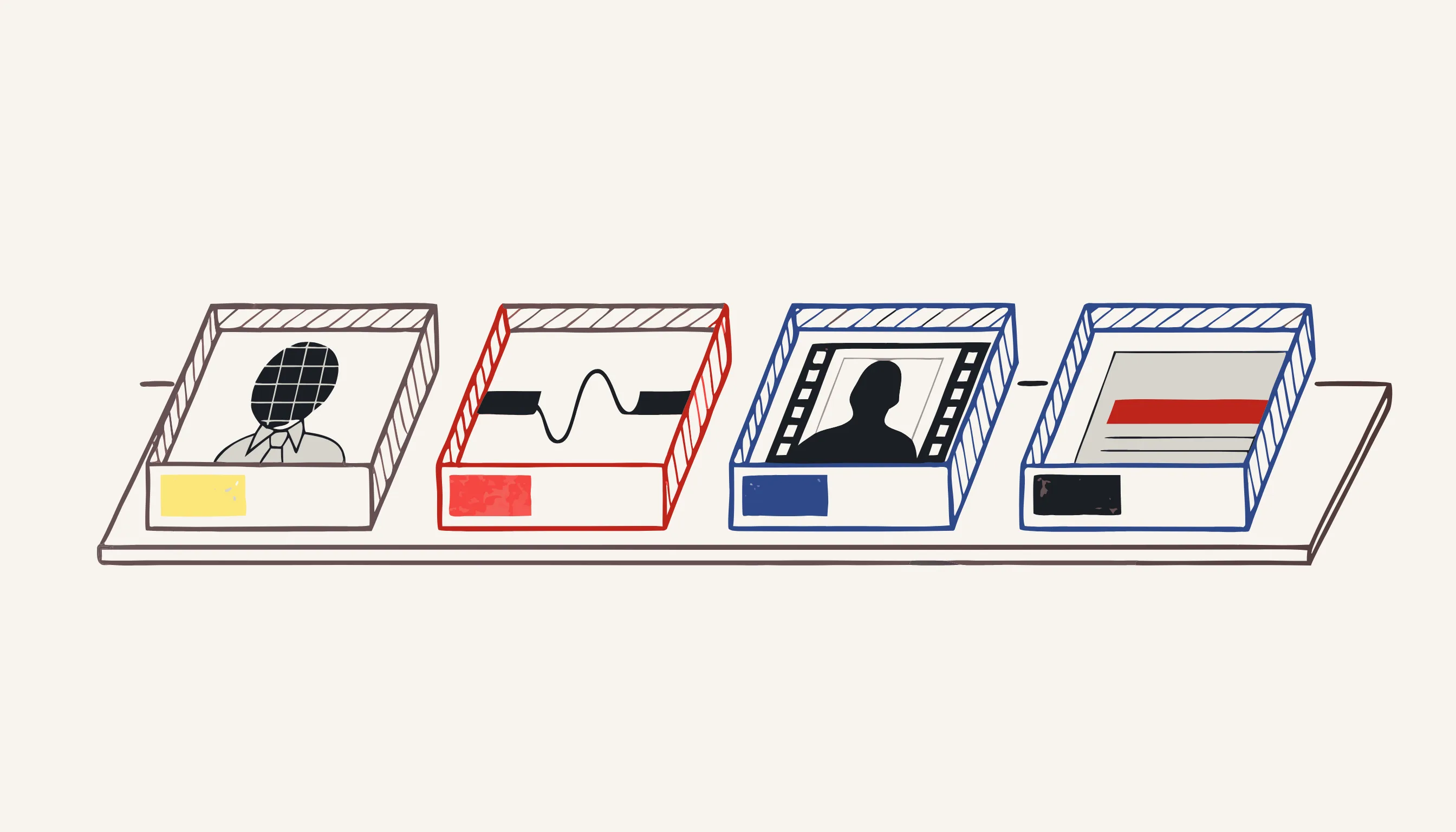
Compliance teams think in regulations; operations teams think in files. The bridge between them is a mapping from each regulated identifier to a concrete removal technique per media type. A name is not redacted the same way in a PDF, a phone call and a CCTV clip.
| Media type | What carries PII | Removal technique | Irreversible? |
|---|---|---|---|
| Documents (PDF, DOCX, scans) | Names, IDs, MRNs, addresses, signatures | Regex + checksum detection → flattened black boxes over text and image layers | Yes: pixels and text are destroyed, not hidden |
| Images | Faces, license plates, document scans, EXIF metadata | Object detection → solid boxes/pixelation + full metadata strip | Yes |
| Audio | Spoken names, numbers, addresses | Timestamped transcript → beep or silence on the waveform | Yes: samples are overwritten |
| Video | Faces, plates, on-screen text, spoken PII | Per-frame face/object blur + audio redaction | Yes |
| Logs / structured | IPs, emails, user IDs, geolocation | Field-level deletion or generalization | Yes |
Each media type has a dedicated playbook: redacting PII in documents, blurring faces in video, and stripping faces and metadata from images. For structured exports (logs, CSV files and support tickets), redact the PII straight from the text. The common thread is that a visual overlay or a masked field is not enough if the underlying data survives beneath it; flattening and destruction are what make removal irreversible.
A worked example
A hospital exports a patient consultation recording for a quality-review vendor. Under HIPAA Safe Harbor, 18 identifier categories must go. In that one file you may have: the patient's spoken name and date of birth (audio → beep), their face if it's a video consult (video → blur), and an MRN visible on a referral document shared on screen (on-screen text → box). One regulation, one file, three distinct deterministic operations, all driven by the same policy.
The org-wide anonymization policy
Ad hoc anonymization fails audits because it is inconsistent and undocumented. A written policy turns it into a repeatable, defensible process. At minimum it should specify:
- Scope and triggers: which datasets and media types are covered, and what events require anonymization (export, sharing, retention threshold, research use).
- Standard to meet: declare you build to the GDPR "reasonably likely" bar and reference HIPAA's chosen method (Safe Harbor or Expert Determination).
- Identifier catalogue: the concrete list of what counts as PII/PHI in your context (names, MRNs, IPs, faces, voices, account numbers).
- Technique per media type: the mapping from the table above, so operators don't improvise.
- Irreversibility requirement: anonymization must destroy, not mask; no reversible tokens unless explicitly labelled pseudonymization with a separate key-management policy.
- Retention and deletion: how long originals are kept, who can access them, and when they are securely destroyed.
- Audit and review: automated detection plus a human spot-check, with logs retained.
The policy should be short enough to be read and specific enough to be followed. We expand on building one for document-heavy organizations in document anonymization for GDPR enterprises.
Roles and accountability
A policy only works if someone owns each step. The RACI split that works in practice:
- Data Protection Officer / Compliance Lead: Accountable. Owns the policy, picks the standard, signs off on the program, and is the point of contact for regulators.
- Data Owner: Responsible for classification. Knows the dataset, identifies which fields and media contain personal data, and decides what must be removed versus retained.
- Anonymization Operator: Responsible for execution. Runs the tooling, applies the correct technique per media type, and produces the output.
- Security / Audit: Verifies. Confirms irreversibility, reviews the audit trail, and runs spot-checks against the original where retention allows.
- Legal: Consulted. Validates that the technique meets the regulatory bar for the relevant jurisdictions.
Separating "classify," "execute" and "verify" is what makes the process defensible. The person who decides what is sensitive should not be the only one confirming it was removed.

Tooling requirements
Tooling is where most programs quietly fail compliance. Generative "just anonymize this for me" approaches are non-deterministic: run them twice and you may get different results, with no guarantee every identifier was caught. That is unacceptable when a regulator asks you to prove what happened.
The architecture that holds up separates two concerns cleanly:
- AI only LOCATES the sensitive data: speech-to-text and entity recognition for audio, object detection for faces and plates, OCR plus pattern matching for documents. This is what models are genuinely good at: finding things.
- Deterministic code REMOVES it: black boxes over text and image regions, regex-plus-checksum redaction for structured identifiers (so a real card number goes but a random 16-digit string stays), beep or mute on a waveform, and full metadata stripping. This is exact, testable and identical every run.
Concrete requirements to demand of any tool:
- Irreversible by construction: output destroys the data; no hidden layer, no recoverable key.
- Deterministic redaction: the same input and settings always produce the same output.
- Multi-media coverage: documents, images, audio and video under one consistent workflow.
- Checksum-validated detection for structured identifiers, to cut false positives.
- Metadata handling: EXIF, document properties and embedded data stripped, not just visible content.
- Audit trail output: a record of what was detected and removed, exportable for review.
- Data residency and deletion controls: originals handled per your retention policy.
We go deeper on what "irreversible and auditable" demands of an implementation in irreversible, auditable anonymization best practices.
Audit trails: proving it, not just doing it
Under all three regimes, the ability to demonstrate compliance matters as much as achieving it: GDPR's accountability principle, HIPAA's documentation requirements, and CCPA's need to show data was genuinely deidentified all hinge on records.
A useful audit trail captures, per file:
- What was processed and when, and by which operator.
- What categories of PII were detected (without storing the PII itself).
- Which redactions were applied and the technique used.
- Confirmation that the output passed verification.
- The retention or deletion status of the original.
Because the removal step is deterministic code rather than a black-box model, every action is explainable: "this segment was beeped because a phone-number pattern matched at 02
," not "the model decided." That explainability is exactly what a regulator or auditor wants to see, and it is the difference between a program that survives review and one that does not.A practical rollout checklist
- Identify which regulations apply to each dataset (often more than one).
- Build to the strictest standard: irreversible removal at the GDPR bar.
- Catalogue your identifiers and map each to a per-media technique.
- Write the policy and assign the four roles.
- Select tooling that locates with AI and removes with deterministic code.
- Turn on audit logging and retain the records.
- Run automated detection plus a human spot-check on a sample of every batch.
- Securely delete or restrict originals per retention rules.
Start anonymizing across every media type
You don't need a separate tool and a separate process for every regulation and every file format. Upload a document, image, audio file or video, let the assistant locate the sensitive data, and download a copy where it has been irreversibly removed by deterministic code, with the explainability your compliance program needs.
Frequently asked questions
Truly anonymized data, where the individual can no longer be identified by any reasonably likely means, falls outside GDPR's scope, qualifies as de-identified under HIPAA, and is excluded from CCPA's definition of personal information. The key word is 'truly': reversible pseudonymization does not qualify.